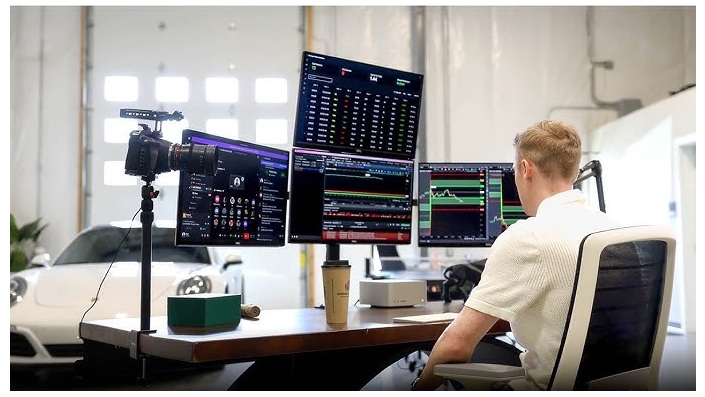
A dependable purchasing and promoting PC setup is one of the most essential investments for anyone involved in inventory buying and selling, forex, cryptocurrency, or futures buying and selling. While buying and selling skills and market analysis determine prolonged-time period fulfillment, a brief and stable laptop enables you to execute trades successfully, show more than one charts, and avoid expensive delays.
Whether you’re a novice or an skilled provider, choosing the proper hardware can enhance your productivity and create a smoother shopping for and promoting experience. In this guide, you will take a look at the whole thing you want to recognize about building the precise buying and selling PC setup, collectively with hardware suggestions, show choice, net necessities, and notebook tips.
Why a Good Trading PC Setup Matters
Financial markets flow short. Even a few seconds of delay could have an effect on trade execution during periods of high volatility.
A effective buying and selling laptop allows you:
- Open a couple of charts without lag.
- Run buying and selling platforms without problem.
- Monitor several markets at the same time.
- Execute orders quicker.
- Reduce device crashes.
- Improve multitasking.
Although net speed and provider execution moreover rely on quantity, reliable hardware ensures your laptop plays continuously during the trading session.
Essential Components of a Trading PC Setup
1. Processor (CPU)
The processor is the thoughts of your computer.
For most customers, present day-day multi-center processors provide superb overall performance.
Recommended options encompass:
- Intel Core i5 or greater present-day
- Intel Core i7 for advanced clients
- AMD Ryzen five
- AMD Ryzen 7
If you operate a couple of purchasing for and research systems, browser tabs, charting software, and spreadsheets simultaneously, investing in a faster processor is worthwhile.
2. RAM (Memory)
Trading software consumes memory, particularly while numerous programs run together.
Recommended RAM:
| Trading Style | Recommended RAM |
|---|---|
| Beginner | 16 GB |
| Active Trader | 32 GB |
| Professional Trader | 64 GB |
More RAM improves multitasking and decreases slowdowns.
3. Storage
A Solid State Drive (SSD) is a fantastic deal quicker than a traditional hard disk.
Recommended storage:
- Minimum: 512 GB SSD
- Ideal: 1 TB NVMe SSD
Benefits encompass:
- Faster startup
- Quick software loading
- Better ordinary machine responsiveness
4. Graphics Card (GPU)
Most searching for and selling systems do not require high-priced gaming graphics playing cards.
If you operate 4 or more video display units, consider a committed pix card that supports multiple displays.
For primary trading and selling, included photographs available in modern Intel and AMD processors are normally enough.
Best Monitor Setup for Trading
Many buyers pick using a couple of video display units because they permit simultaneous monitoring of charts, data, order books, and watchlists.
Single Monitor
Recommended period:
- 24–27 inches
Dual Monitor Setup
Ideal for energetic clients.
Example:
- Monitor 1: Trading platform
- Monitor 2: Charts and information
Triple Monitor Setup
Popular among day traders.
Typical layout:
- Chart evaluation
- Order execution
- News and marketplace scanners
Four-Monitor Setup
Professional traders regularly use 4 video display devices to track several markets simultaneously.
Internet Connection
A fast internet connection is essential.
Recommended specifications:
- Minimum pace: 50 Mbps
- Preferred speed: a hundred Mbps or better
- Stable fiber connection
- Low latency
Having a backup net connection, which includes a cell hotspot, can assist prevent interruptions for the duration of buying and promoting hours.
UPS and Power Backup
Power outages can disrupt open trades.
A UPS (Uninterruptible Power Supply) presents brief backup energy and lets you shut positions appropriately or store your artwork.
Benefits encompass:
- Protection from sudden shutdowns
- Reduced hardware harm
- Extra time during power outages
Keyboard and Mouse
Choose cushty add-ons because investors spend prolonged hours at their desks.
Features to look for:
- Responsive keyboard
- Ergonomic mouse
- Quiet keys
- Comfortable wrist help
Recommended Trading PC Builds
Budget Trading PC
Suitable for beginners.
Specifications
- Intel Core i5 or AMD Ryzen five
- sixteen GB RAM
- 512 GB SSD
- Integrated snapshots
- Two 24-inch monitors
Mid-Range Trading PC
Ideal for lively customers.
Specifications
- Intel Core i7 or AMD Ryzen 7
- 32 GB RAM
- 1 TB NVMe SSD
- Dedicated photos card (optionally available)
- Three video show gadgets
Professional Trading PC
Designed for advanced buyers.
Specifications
- Intel Core i9 or AMD Ryzen nine
- sixty four GB RAM
- 2 TB NVMe SSD
- Multi-display photographs card
- Four video display units
Laptop vs Desktop for Trading
Desktop Advantages
- Better cooling
- Easier improvements
- Supports more than one video display device
- Higher overall performance for the fee
Laptop Advantages
- Portable
- Compact
- Useful whilst traveling
- Lower energy intake
If you are speaking of a change from home, a computer typically offers higher value and expandability.
Trading Desk Setup Tips
A well-organized workspace improves comfort and productivity.
Suggestions embody:
- Position monitors at eye level.
- Use an ergonomic chair.
- Keep cables organized.
- Ensure right lighting.
- Maintain appropriate airflow around the laptop.
- Use a spacious desk for a couple of video display devices.
Comfortable surroundings permit reduced fatigue during long trading sessions.
Software Every Trader Should Install
Depending on your market, beneficial software can also consist of:
- Trading platform from your dealer
- Charting software software software
- Spreadsheet utility
- Web browser
- Note-taking app
- News software
- Password supervisor
- Antivirus software program
Keep your working machine and packages up to date to beautify protection and balance.
Common Mistakes to Avoid
Many buyers spend money on useless hardware even as overlooking vital necessities.
Avoid those mistakes:
- Buying a high-priced gaming GPU for primary shopping and selling.
- Using too little RAM.
- Relying on an old hard drive instead of an SSD.
- Ignoring internet reliability.
- Skipping power backup.
- Overloading one display with too many home windows.
A balanced setup normally can offer the best experience.
Tips to Improve Trading Performance
Good hardware is only one part of successful buying and selling.
Also take into account the following practices:
- Keep your software program updated.
- Close unused programs.
- Back up essential documents frequently.
- Maintain a smooth workspace.
- Test your internet connection before market hours.
- Follow a disciplined buying and selling plan.
These practices permit you to stay targeted and decrease technical interruptions.
Is an Expensive PC Necessary?
Not continuously.
Most customers can perform correctly with a mid-range computer providing:
- Modern processor
- sixteen–32 GB RAM
- SSD garage
- Dual video display units
- Stable net connection
Spending more on pointless add-ons does not guarantee better trading results. Focus on reliability, pace, and luxury instead.
Conclusion
Building the right buying and selling PC setup is about growing a reliable, speedy, and comfortable workspace that permits your buying and selling style. A modern-day processor, sufficient RAM, SSD storage, more than one video display units, and a stable internet connection are the center elements of an inexperienced buying and selling computing device.
Whether you’re an amateur putting a few trades every week or a professional tracking numerous markets sooner or later of the day, making an investment inside the right setup can improve productivity and reduce technical distractions. Combine a dependable PC with disciplined risk management and continuous learning, and you may be better prepared for the demanding conditions of modern financial markets.
Frequently Asked Questions
1. How a lot RAM do I need for buying and selling?
For most traders, 16 GB RAM is enough. Active buyers using multiple systems can also benefit from 32 GB.
2. Is a photos card critical for buying and selling?
Not normally. Integrated graphics are good enough for most users searching for and selling setups. A devoted GPU is useful in case you plan to use several video display units.
3. How many video display devices does a provider need to use?
Beginners can start with one or two video display units, whilst expert buyers often select 3 or 4 for advanced multitasking.
4. Is a laptop correct for getting and selling?
Yes. A pc works well for portability, but a pc typically gives higher overall performance, cooling, and improved options.
5. What internet speed is suggested for getting and selling?
A stable broadband or fiber connection of 50–a hundred Mbps or better is commonly recommended, with a backup internet source for added reliability.