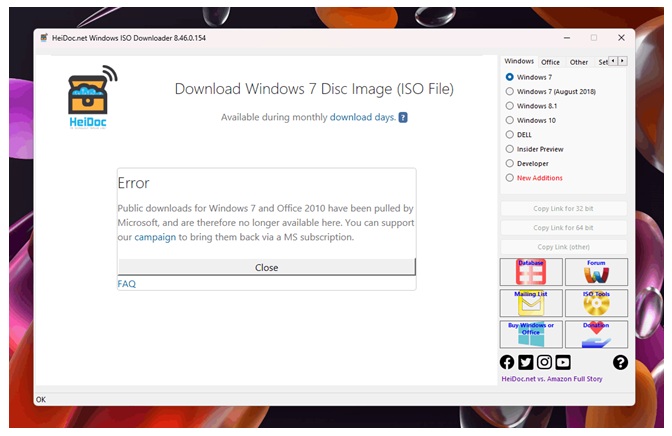
Even though Windows 10 and Windows 11 are widely used at the moment, many people nonetheless look for a Windows 7 ISO file download. Some customers have older laptop systems that run better on Windows 7, while others need it for software compatibility, testing, or repairing a gift installation.
Downloading a Windows 7 ISO file is easy if you use a relied on deliver. However, you should always avoid unofficial websites that distribute modified or risky ISO files containing malware.
What Is a Windows 7 ISO File?
A Windows 7 ISO file is a complete digital replica of the Windows 7 setup DVD. It includes all of the files required to install or reinstall the operating system.
Instead of using a physical DVD, clients can download the ISO file and create a bootable USB pressure for setup.
Windows 7 ISO files are available in the following:
- 32-bit (x86)
- sixty four-bit (x64)
Before downloading, make sure you pick out the version that matches your laptop’s hardware.
Why Do People Download Windows 7 ISO Files?
Although Windows 7 reached the end of Microsoft’s first-class support in January 2020, many users continue to use it for unique reasons.
Some common reasons include:
- Reinstalling Windows after a machine crash.
- Repairing a corrupted working machine.
- Installing Windows on an older PC.
- Running legacy software that doesn’t work properly on more recent Windows versions.
- Creating a digital device for checking out.
For these conditions, an ISO file is the very quality manner to reinstall Windows 7 yet again.
How to Download Windows 7 ISO File Safely
When looking for a Windows 7 ISO file download, continuously prioritize reliable and valid sources.
Here are some hints:
- Use Microsoft’s respectable download options if available for your product key.
- Download only the right, unmodified ISO files.
- Avoid websites that bundle deal greater software program software or installers.
- Verify the file size and checksum at the same time as possible.
- Scan downloaded files with updated antivirus software.
Using unofficial or modified ISO files can expose your pc to security risks.
Windows 7 Editions Available
Windows 7 has been launched in numerous variations, each designed for one-of-a-kind clients.
| Edition | Best For |
|---|---|
| Starter | Entry-level netbooks |
| Home Basic | Basic home users |
| Home Premium | Home entertainment and everyday use |
| Professional | Small businesses and professionals |
| Enterprise | Large organizations |
| Ultimate | Advanced users with all features |
Most home clients preferred either Home Premium or Professional.
Minimum System Requirements
Before installing Windows 7, make sure your computer meets the minimum hardware requirements.
| Component | Minimum Requirement |
| Processor | 1 GHz or faster |
| RAM | 1 GB (32-bit) or 2 GB (64-bit) |
| Storage | 16 GB (32-bit) or 20 GB (64-bit) |
| Graphics | DirectX 9 compatible |
| Display | 800 × 600 resolution |
While Windows 7 can run on older hardware, higher specs provide a smoother experience.
How to Create a Bootable USB
After downloading the ISO file, you will need a bootable USB drive to install Windows 7.
Follow these steps:
- Insert a USB drive with at least eight GB of storage.
- Use a trusted bootable USB creation tool.
- Select the downloaded Windows 7 ISO file.
- Choose the USB drive.
- Start the process
- Wait until the bootable USB is created.
Once completed, restart your computer and boot from the USB pressure to start installation.
Installing Windows 7
Installing Windows 7 is straightforward.
The number one approach consists of:
- Boot from the USB drive.
- Choose your language and keyboard layout.
- Click Install Now.
- Accept the license agreement.
- Select the installation type.
- Choose the partition in which Windows will be installed.
- While Windows copies files.
- Complete the preliminary setup.
After setup, install the preferred hardware drivers and obtain protection updates.
Should You Still Use Windows 7?
Windows 7 remains considered one of Microsoft’s most well-known operating systems; however, it isn’t supported with everyday security updates.
If your pc supports Windows 10 or Windows eleven, upgrading is typically the more secure choice. Newer versions collect ongoing security patches, better hardware support, and compatibility with modern software.
However, Windows 7 can also be appropriate in conditions such as:
- Running older commercial programs.
- Using legacy hardware.
- Offline structures with out a internet get right of entry to.
- Software testing in virtual environments.
For internet-connected computers, the use of a supported operating system is usually recommended for better safety.
Tips Before Installing Windows 7
Before reinstalling Windows, keep these hints in mind:
- Back up important files and documents.
- Verify that your Windows product key is available.
- Download hardware drivers if available.
- Ensure your PC supports Windows 7.
- Disconnect vain out of doors devices during installation.
- Create recovery media if possible.
Preparation helps avoid data loss and setup issues.
Common Installation Problems
Some clients can also moreover face issues at the same time as putting in Windows 7.
Common problems include:
- USB not booting.
- Missing storage drivers.
- Invalid product key.
- Installation freezing.
- Missing community drivers after setup.
Most of those troubles may be resolved via the use of a genuine ISO file, creating the bootable USB effectively, and installing the proper drivers.
Final Thoughts
Searching for a Windows 7 ISO file download is still common amongst users who need to reinstall the operating system on older computer systems or run legacy applications. An ISO file presents an available way to create installation media and restore your PC whilst essential.
Always download Windows 7 from a trusted source, verify the report earlier than using it, and ensure your pc meets the minimum system requirements. While Windows 7 continues to work for lots offline or legacy situations, customers with well-supported hardware need to don’t forget shifting to a more modern version of Windows for improved security and prolonged-term assist.
FAQs
What is a Windows 7 ISO file?
A Windows 7 ISO file is a complete disk image used to install or reinstall the Windows 7 operating system.
Can I download Windows 7 ISO legally?
If you have a valid Windows 7 product key, you will be able to acquire a legitimate installation ISO throughMicrosoft’s valid channels or legal sources, depending on availability.
Which version ought to I download: 32-bit or sixty four-bit?
Choose the version that suits your computer’s processor and hardware. Most cutting-edge-day-day structures help the sixty four-bit version.
Can I install Windows 7 using a USB drive?
Yes. After creating a bootable USB from the ISO file, you could installation Windows 7 without the use of a DVD.
Is Windows 7 still stable to use?
Windows 7 no longer receives regular security updates. For computer systems associated with the internet, a supported working tool together with Windows 10 or Windows eleven is generally recommended.